
日本データベース学会 Newsletter 2026年6月号 (Vol.19, No. 3)
目次
- ICLR2026 参加報告
藤原 廉(大阪大学産業科学研究所) - EDBT2026 参加報告
藤原 靖宏(NTTコミュニケーション科学基礎研究所) - DASFAA2026 Report
Tarun Sreepada(東京大学生産技術研究所) - EACL2026 参加報告
植田 暢大(NEC ナレッジサイエンス研究所)
本号では、国際会議 ICLR2026, EDBT2026, DASFAA2026, EACL2026 の参加報告をご寄稿いただいております。会議の動向やご自身の研究内容などのご紹介となります。
本号並びに DBSJ Newsletter に対するご意見あるいは次号以降に期待する内容についてご意見がございましたら news-com [at] dbsj.org までお寄せください。
DBSJ Newsletter 編集委員会
(担当編集委員 村上 直)
1.ICLR2026 参加報告
藤原 廉(大阪大学産業科学研究所)
2026年4月23日から27日にかけて、ブラジル・リオデジャネイロにて、機械学習・深層学習分野のトップカンファレンスである ICLR 2026(The Fourteenth International Conference on Learning Representations)が開催されました。ICLR は、表現学習および深層学習を中心に、自然言語処理、コンピュータビジョン、強化学習、ロボティクス、AI for Science など幅広い分野の研究が発表される主要国際会議です。私は採択論文の発表のため現地参加しました。会議は3日間の本会議と2日間のワークショップから構成されました。
今年の ICLR では、Maja Matarić 氏、Max Welling 氏、Percy Liang 氏、Katie Bouman 氏、Karen Adolph 氏、Pablo Arbeláez 氏による6件の招待講演が行われました。講演内容は、ヒューマンセンタードAIとロボティクス、物理学とAIの接点、オープンな基盤モデル開発、科学的イメージング、乳幼児の発達と知能、AI for Open Science など多岐にわたり、ICLR が単なる深層学習アルゴリズムの会議にとどまらず、AIを基盤とする幅広い科学技術分野の議論の場へと拡大していることを強く感じました。個人的には、Percy Liang 氏によるオープンな基盤モデル開発に関する講演と、Max Welling 氏による物理学・材料科学・AIを接続する講演が特に印象的でした。論文や講義資料を通じて名前を知っていた著名な研究者の問題意識を直接聞けることは、国際会議に現地参加する大きな意義の一つであると改めて感じました。
投稿・採択の規模も非常に大きく、ICLR 2026 には 19,525 件の有効投稿があり、最終的に 5,355 件が採択されました。採択率は 27.4% で、会議規模の大きさと研究競争の激しさがうかがえます。本会議では口頭発表とポスター発表が並行して行われ、3日間で合計6回のポスターセッションが実施されました。多数の発表が同時に行われるため全体を追うことは困難でしたが、関心の近い研究者と直接議論できる機会が多く、研究動向を把握するには非常に密度の高い場でした。採択論文の傾向としては、大規模言語モデル(LLM)や基盤モデルに関する研究が引き続き目立っていました。特に、LLMエージェント、推論能力、長文コンテキスト、モデル編集、安全性、ベンチマーク、解釈性など、実環境で信頼して利用するための研究が活発化している印象を受けました。また、ロボティクスやAI for Science など、応用分野との融合も顕著でした。
最後に、我々の採択論文“When to Retrain after Drift: A Data-Only Test of Post-Drift Data Size Sufficiency”について簡単に紹介します。本研究では、非定常データストリームにおいて、変化を検知した後に「いつ再学習すべきか」という問題に着目しました。従来のドリフト検知では、主に「いつ分布が変化したか」を判定することに焦点が当てられてきましたが、実際の運用では、変化直後のデータがまだ十分でない段階で再学習を行うと、かえって予測性能が不安定になる場合があります。そこで本研究では、外部のドリフト検知器から変化アラームが与えられた後、再学習に十分なポストドリフトデータが蓄積されたかを、モデル非依存かつデータ駆動的に判定する手法を提案しました。ポスター発表では、非定常時系列、オンライン学習、モデル更新、実環境での予測システムに関心を持つ研究者と議論することができ、本研究の今後の発展に向けて有益なフィードバックを得ることができました。
ICLR 2027 は、8年ぶりに米国西海岸で開催される予定とのことですが、詳細な開催都市・会場は現時点ではまだ発表されていません。ICLR は投稿数・参加者数ともに急速に拡大しており、深層学習・表現学習のみならず、AIの社会実装、科学応用など幅広い研究領域において重要な会議となっています。機械学習分野にご興味のある方は、論文投稿や現地参加を検討されてみてはいかがでしょうか。
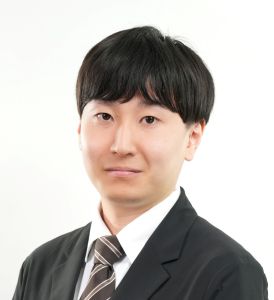
著者紹介:
藤原 廉(大阪大学産業科学研究所)
2.EDBT2026 参加報告
藤原 靖宏(NTTコミュニケーション科学基礎研究所)
2026年3月24日から27日にかけてフィンランド・タンペレ大学にてデータベース分野の主要国際会議である 29th International Conference on Extending Database Technology(EDBT 2026) が開催されました。EDBT はクエリ処理や最適化といったデータベースの中核技術を中心に、ビッグデータ処理基盤、分析手法、さらには近年の AI 活用までを幅広く扱う、ヨーロッパを中心とした研究コミュニティに強い影響力を持つ国際会議です。
本年は162件の投稿に対して51件が採択され採択率は約31%でした。参加者は279名でドイツ、フランス、イタリアなど欧州諸国を中心にアメリカ、日本を含む世界各国から研究者が集まりました。大学だけでなく研究機関や企業研究所からの参加も多く、データベース技術の実応用を意識した議論が活発に行われていました。
キーノート講演では、データ管理分野の将来像を俯瞰する内容が多く印象的でした。Holger Pirk 氏(Imperial College London)は機能追加を重ねた結果として複雑化した従来データベースの問題点を指摘し、部品を組み合わせるように柔軟で拡張可能なアーキテクチャへの転換を提案しました。またAlon Halevy 氏(Google Cloud)は生成AIの発展により構造化・非構造化データを統合的に扱えるようになり、自然言語によるデータ検索や分析パイプライン構築が一般化しつつある現状を紹介し、データ管理とAIの融合が今後さらに進むことを示しました。
一般講演全体を通しては理論的新規性だけでなく、手法の詳細な比較・分析やベンチマーク評価を重視する実験中心の論文が多く見られました。Best Paper に選ばれた provenance sketch のインクリメンタル更新手法や、ブロックチェーン実行基盤の高並列化に関する研究など、実システムでの性能改善に直結する研究が高く評価されていた点はEDBTらしい特徴だと感じました。
私は “Accelerating Graph Construction for MIPS without Search Accuracy Loss” という題目で発表を行いました。本研究では内積最大探索に用いられるグラフインデックス構築において、近似表現と計算打ち切りを組み合わせることで最終的な検索精度を損なうことなく構築時間を大幅に短縮する手法を提案しました。発表では精度保証を支える理論的背景について質問を受けるなど関心の高さを感じるとともに、発表後には既存手法のさらなる精度向上に関する議論も行うことができました。
一方で国際情勢の影響により一部の研究者が現地参加できずオンライン発表となる場面もあり、国際会議の開催環境が世界情勢に大きく左右される現実も実感しました。それでもデータベース分野の最新動向と実用を強く意識した研究文化を直接体感できたことは大きな収穫であり非常に有意義な参加となりました。
次回のEDBTはフランス・リールで開催予定です。データベース分野の最新の研究動向を把握することができる良い機会なので、ご興味ある方は来年の参加を検討されてみてはいかがでしょうか。
著者紹介:
藤原 靖宏(NTT株式会社)

3.DASFAA2026 Report
Tarun Sreepada(東京大学生産技術研究所)
Conference Report: DASFAA 2026
The 31st International Conference on Database Systems for Advanced Applications Jeju Island, South Korea: April 27–30, 2026
1. Conference Overview
The 31st International Conference on Database Systems for Advanced Applications (DASFAA 2026) was held on Jeju Island, South Korea, from April 27 to April 30, 2026. DASFAA is a leading annual forum in the Asia-Pacific region for presenting cutting-edge research on database systems and their applications, bringing together researchers, developers, and practitioners from academia and industry.
This year, the research track received 834 submissions, of which 228 were accepted as full papers, yielding an acceptance rate of 27.3%. Notably, 748 of the 834 submissions originated from China, reflecting the strong engagement of the Chinese research community in this venue. Proceedings were published by Springer as Lecture Notes in Computer Science (LNCS).
2. Keynote Addresses
The conference featured three keynote addresses that collectively highlighted the evolving role of AI, hardware, and graph intelligence in modern data systems.
Keynote 1: “A Wakeup Call: The SSD Isn’t the Bottleneck, We Are” Viktor Leis, Technical University of Munich (TUM) — Tuesday, April 28
Professor Leis argued that while modern NVMe SSDs have become both affordable and extremely fast, many database systems fail to exploit their full potential. The gap between raw device capabilities and end-to-end throughput is not a hardware problem but a software one: long-standing abstractions in the database stack have become performance bottlenecks. Drawing on lessons from the LeanStore project, he outlined how rethinking the interface between the operating system and the DBMS, reconsidering core engine architecture, and investing in meticulous low-level engineering can close this gap. He also discussed how these lessons extend to the cloud, where disaggregation introduces new cost-performance trade-offs.
3. Highlights from the Recommendation Systems Sessions
A significant portion of the conference program was devoted to search and recommendation, spanning six dedicated sessions. A central theme was the integration of large language models into recommendation pipelines and the practical challenges this introduces, particularly around inference latency.
One notable approach, PSAD (Efficient Personalized Reranking with Semi-Autoregressive Generation and Online Knowledge Distillation), addressed this latency problem through a two-stage architecture: a semi-autoregressive teacher model that achieves high-quality ranking during training, and a lightweight student model that distills the teacher’s knowledge online, enabling real-time inference with minimal accuracy loss.
Another recurring concern was popularity bias, the tendency of recommender systems to over-represent popular items at the expense of niche but relevant content. CDDF (Confidence- and Divergence-Aware Dual-View Dynamic Fusion) tackled this for long-tail recommendation by balancing confidence in popular-item predictions with awareness of underrepresented content. Meanwhile, DTTFD (Mitigating Popularity Bias for Two-sided Fairness via Dual-Teacher Distillation) approached fairness from both the user and item sides, using a dual-teacher distillation framework to produce fairer recommendations without requiring access to sensitive user attributes.
Several papers also explored reasoning-enhanced recommendation. CARARec-style approaches aim to emulate the step-by-step reasoning process that humans use when evaluating items, rather than simply aggregating interaction histories into a single embedding, a paradigm shift enabled by chain-of-thought prompting and reinforcement learning techniques.
4. Awards
10-Year Best Paper Award was presented to G. Sateesh Babu, Peilin Zhao, and Xiao-Li Li (Institute for Infocomm Research, A*STAR) for their 2016 paper, “Deep Convolutional Neural Network Based Regression Approach for Estimation of Remaining Useful Life.” This paper pioneered the application of deep convolutional neural networks (CNNs) to predictive maintenance, adapting filters traditionally used for image recognition to scan temporal sensor data across multiple channels. By automating feature extraction from raw sensor signals and simultaneously optimizing both the feature representations and the remaining-useful-life predictions through supervised feedback, the approach significantly outperformed existing methods. The paper has since been cited over 1,300 times and remains highly influential in the prognostics and health management community.
Best Paper Award went to “DynamicPO: Dynamic Preference Optimization for Recommendation” by Xingyu Hu et al. (University of Science and Technology of China / Shanghai Innovation Institute / Meituan).
Best Paper Runner-Up was awarded to “Mitigating Generic Token Dominance in Cross-Domain Foundation Model for Text-Attributed Graphs” by Heng Zheng et al.
Best Demo Award was presented to “Investigating Machine Learning Models for Cardinality Estimation: An Interactive Approach” by Li Rui et al. (The Chinese University of Hong Kong / Beijing Institute of Technology).
5. Our Paper Presentation
My colleagues and I presented our paper, “Adaptive GPU Compute Resource Allocation for Efficient High-Utility Itemset Mining”, during the Data Mining and Knowledge Discovery session on Wednesday, April 29.
Our work addresses the computational challenge of high-utility itemset mining by leveraging GPU parallelism. The core idea is to partition the mining workload into two categories: large tasks that are well-suited for parallel execution on the GPU, and small tasks where parallelization overhead outweighs the benefits. For the large tasks, we employ a runtime histogram to dynamically determine the optimal GPU block size, enabling adaptive allocation of compute resources. This approach achieved approximately two orders of magnitude speedup compared to the state-of-the-art CPU-based methods.
Our participation at DASFAA provided a valuable opportunity to share these findings and receive constructive feedback from the broader data management and mining community. In particular, attendees raised insightful points about incorporating GPU memory bandwidth considerations into our data access patterns, a direction we plan to explore in future work.
6. Concluding Remarks
DASFAA 2026 provided a rich environment for discussion and exchange, bringing together researchers from diverse backgrounds to explore the latest advancements in database systems, data mining, and AI-driven data management. The overarching theme of this year’s conference was clear: databases are no longer passive storage systems but are increasingly becoming intelligent, adaptive components of AI-driven architectures — from self-tuning query engines to knowledge structures that underpin autonomous agents.
We are grateful for the opportunity to present our research on GPU-accelerated high-utility itemset mining and look forward to incorporating the feedback we received into future work.
著者紹介:
Tarun Sreepada(東京大学生産技術研究所)

4.EACL2026 参加報告
植田 暢大(NEC ナレッジサイエンス研究所)
2026年3月24日から29日まで、モロッコ・ラバトで開催された EACL 2026 (The 19th Conference of the European Chapter of the Association for Computational Linguistics) に現地参加し、ポスター発表を行いました。EACLは ACL の欧州支部が主催する自然言語処理・計算言語学分野の主要国際会議であり、今回は EACL として初めてアフリカ大陸で開催された回でもありました。
EACL 2026 では、Main Conference に 445 本、Findings に 355 本の論文が採択されました。Main Conference の採択率は 20.2%、Findings の採択率は16.1% であり、ARR を通じた投稿・査読体制のもとで大規模なプログラムが構成されていました。発表形式としては、Main Conference の対面発表 328 本のうち 195 本が oral、133 本が poster であり、Findings の対面発表はすべてポスターとして実施されました。ポスターセッションの規模感はちょうどよく、90分のセッション内で関心の近い発表を見て回りつつ、著者と十分議論ができました。
会議全体としては、大規模言語モデルを前提とした研究が中心でありながら、単純な性能向上だけでなく、検索拡張生成 (RAG)、Web エージェント、マルチモーダル理解、安全性、評価、そして多言語・低資源言語への展開が目立っていました。特にラバト開催という文脈もあり、Arabic NLP、African languages、low-resource languages に関するワークショップや発表が多く、英語中心のベンチマークだけでは捉えられない言語処理の課題が強く意識されていました。一方で、タイトルに多く現れていた単語として multilingual、knowledge、detection、multimodal、agents、safety、vision-language、structured などがあり、従来の NLP タスクの枠を越えて、より応用やシステムに近い方向へ研究領域が広がっていることを感じました。
私は Findings に採択された “SCAN: Semantic Document Layout Analysis for Textual and Visual Retrieval-Augmented Generation” という論文を発表しました。本研究では、図表を含む文書ページの画像をトピック単位で分割する意味的文書レイアウト解析を提案しています。図表を含む文書を RAG で扱う際、ページ全体をそのまま視覚言語モデルに入力すると、情報過多により読解の誤りが生じやすくなります。そこで、必要な文脈を保ったまま入力情報を削減する前処理として意味的文書レイアウト解析を導入し、RAG ベンチマークにおいて有効性を示しました。ポスター会場では文書理解・検索系の発表が近い位置に配置されており、発表の合間に他の著者と議論をしたりもできました。
関連する発表では、“SCoPE VLM: Selective Context Processing for Efficient Document Navigation in Vision-Language Models” が印象に残っています。これは文書理解をエージェント的に扱う研究です。自身の研究と同様に、文書や図表を単にモデルへ入力するだけでは不十分であり、必要な情報をどのように選び、モデルにどのように読ませるかが重要であることを示していました。また、“WebRollback: Enhancing Web Agents with Explicit Rollback Mechanisms” のように、Web エージェントが失敗した操作から明示的に手戻りする能力を扱う研究もあり、現在NECが取り組んでいる Web エージェント研究と直接つながる話題を多く見つけることができました。
開催地であるラバトは、古い建物が残る旧市街と新しく整備された建物が混在しており、歴史が感じられる街でした。料理はスパイスの効いたものが多く、食事の面でもモロッコらしさを感じることができました。ラバト自体は観光都市というより政治の中心地という印象でしたが、鉄道で1時間ほど移動すると周辺の観光地にもアクセスでき、アフリカ大陸で初めて開催された EACL に現地参加したことは記憶に残る経験となりました。
次回の EACL 2027 は、2027年3月9日から14日にギリシャ・アテネで開催予定です。自然言語処理だけでなく、RAG、情報検索、文書理解、エージェント、構造化データ処理に関心のある方にとっても、EACL は今後ますます重要な会議になると感じました。
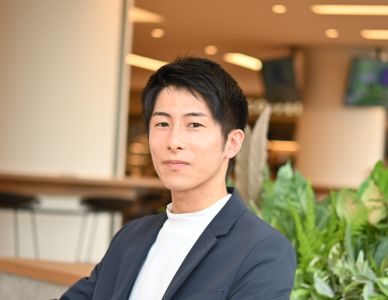
著者紹介:
植田 暢大(NEC)
過去のNewsletterはこちらです。